

When are crushes dangerous?
Plus a pining playlist, obviously.

Trigger note: The following essay deals with lyrics and digressions on suicide, mental illness, and violence.
Spoilers ahead: TV series Off Campus and the book/films of Wuthering Heights
Part One: I’ve got it bad, for crushes
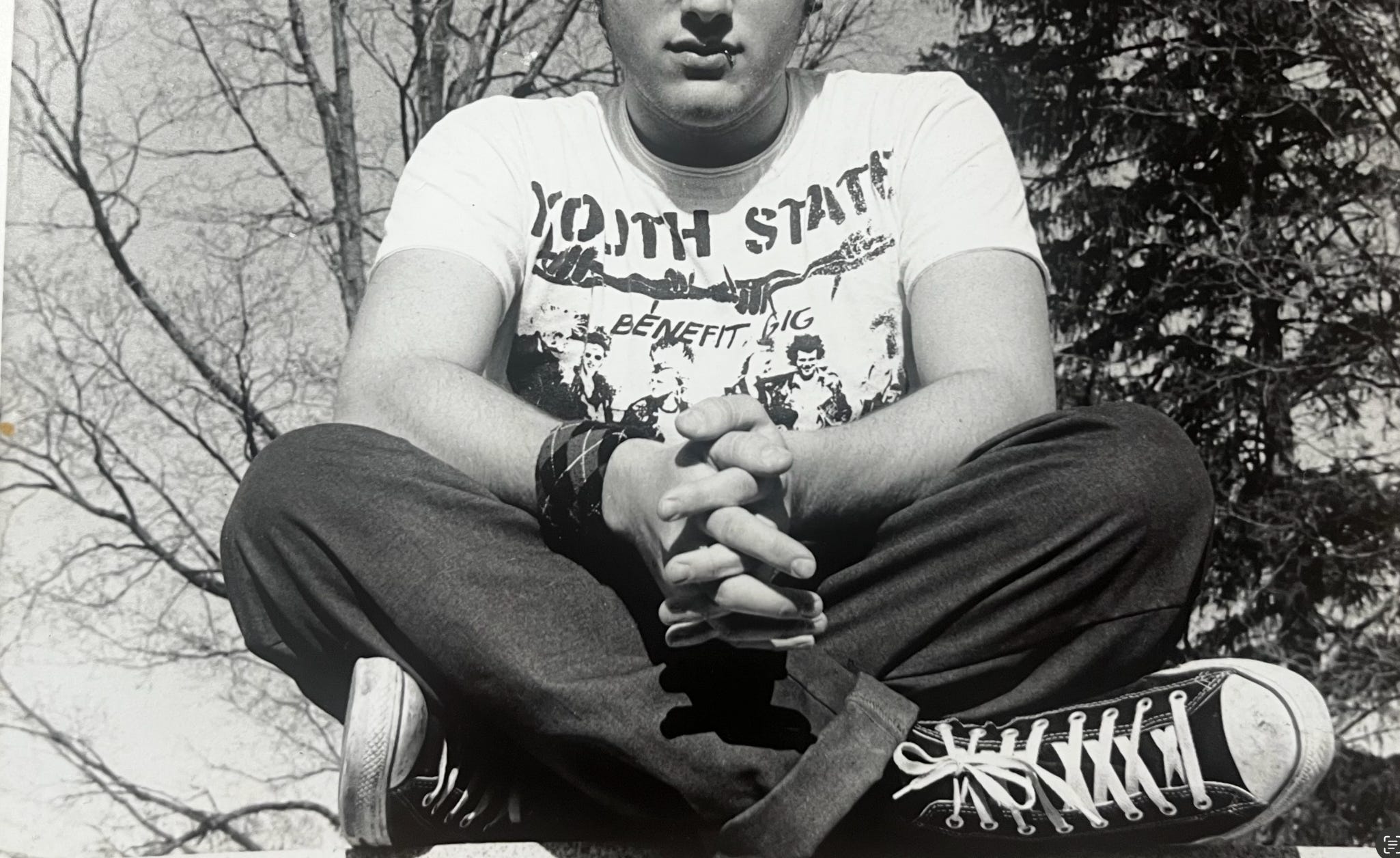
A mentor of mine once told me that writers always write about the same thing, in essence, for the entirety of their careers. This was as depressing to me as finding out in grade eleven drama class that every story in the history of human kind, fit into one of seven basic plots. After a petulant urge to prove him wrong, I did a search in my notes and documents apps for the word “crush.” I was obliterated with multiple half-finished essays, partially coherent thoughts, and journal entries about crushes, their dangers, and merits.
Why, at almost 40-years-old, is a married mother of two still talking about crushes? Real ones that are long out of my life take up a lot of space in my memoir. I wax poetic about the character crushes in popular culture that pepper our streaming services or star in book club picks. And to what end? A part of me feels paranoid for even speaking the word aloud now, a grown, confident woman. But in a way, I’m not in such a different a place I was at 17. Still self-conscious of my thoughts. “Who even cares about me/this essay/this memory?” Why do crushes still feel important to address now?
I believe that right now audiences are being force-fed high stakes, fraught, intense, and brutal love stories. Arcs that often feature frenemies-to-lovers, adultery, or “leave me and I’ll die,” main character energy. Wuthering Heights to Euphoria. Bridgerton and Heated Rivalry. A Court of Thorns and Roses, Babygirl. But, what came first? Our appetites or the end products which are published and produced (and shoved in our faces via social media feeds?)
As I widened my scope and tried to find high stakes love stories in books and films from before Y2K, they certainly still existed (James Bond, Romeo & Juliet, six Wuthering Heights adaptations between the 1970s and 1990s), but often “love” stories that were most popular then were much subtler than now. The setups might have been ridiculous (hi, Never Been Kissed) but the way attraction unfolded in 90’s rom coms and dramas rarely felt like life or death decisions. Films like When Harry Met Sally, The Wedding Singer, and Pretty Woman, showed that you didn’t need to die for love. That falling in love was simply nice.
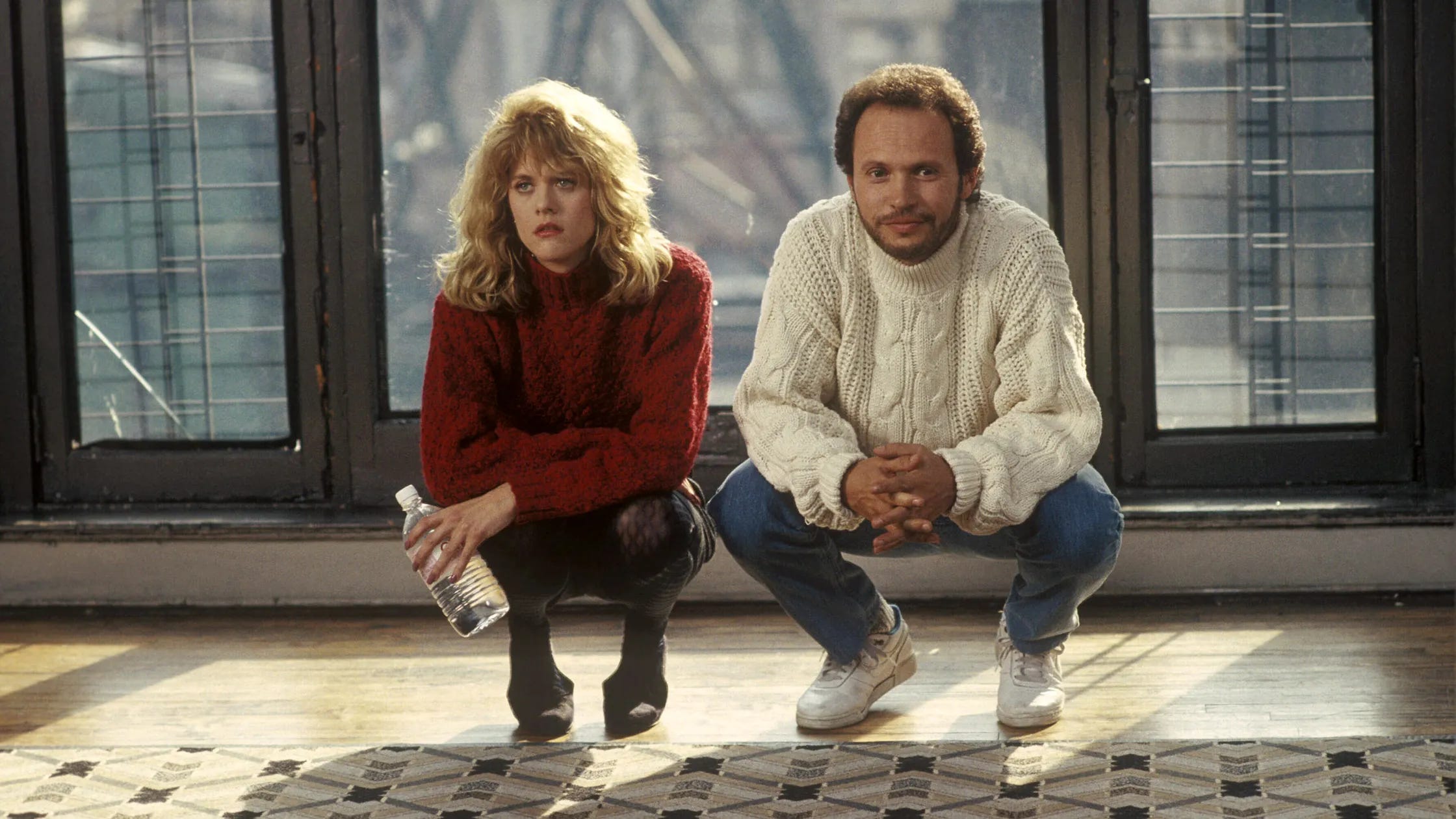
“It is so nice when you can sit with someone and not have to talk,”
– Billy Crystal in When Harry Met Sally.
My friends and I tried to trace the beginnings of this shift. Could it have been Twilight? Where the need to jump some dreamy dude’s immortal bones would be worth losing your life over? (Bella would in fact need to be killed, by Edward, to be loved by Edward—forever). I miss the gentler approach to love. The decades-long burn in the Before Trilogy beautifully captures yearning and attraction while the characters continue to live fully realized, independent lives. I wonder if we wrote and cherished stories that showed how octogenarians stay in love, there’d be less fidgety couples, each on their phones at night, scrolling IG accounts of a chiseled Jacob-Harrison-Chris-Graham-Connor-type lifting a Margot-Scarlett-Gal-Jennifer-type by the corset.
Part One and a Half: Maybe it’s the music?
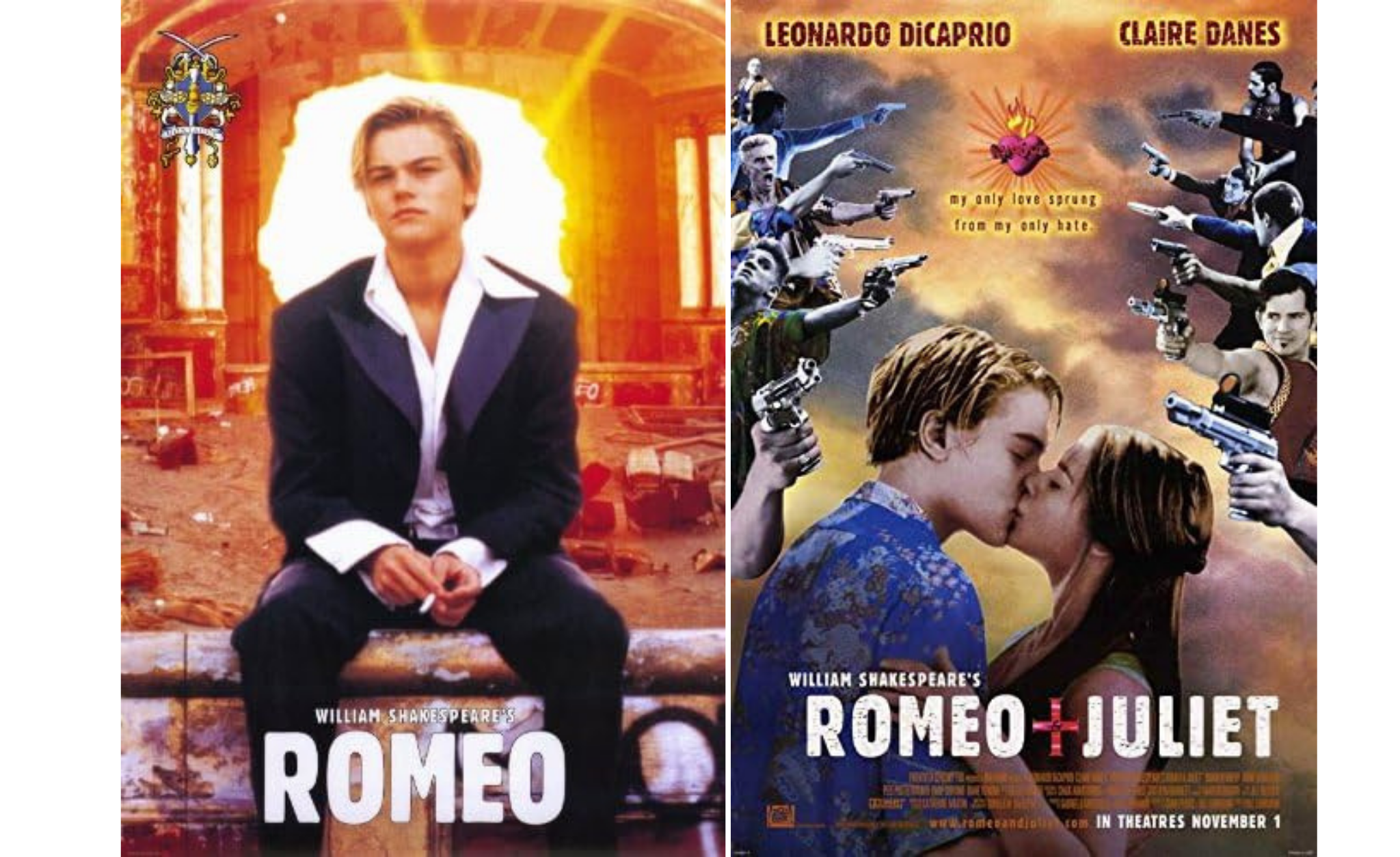
Could it have been Romeo & Juliet? Not just any recantation, but the 1996 Baz Luhrman adaptation that starred every girls crush at the time, Leonardo DiCaprio. This was one of the first times in my life I saw literature transcend the page and screen into real-life frenzy. The actors (mostly Leo) were plastered on covers of Teen Beat and BOP magazines in newsstands everywhere. Then there was the soundtrack, arguably such a part of the film that one could not exist without the other.
The first song on the soundtrack is Garbage’s #1 Crush. This gravelly anthem is more like a chant. It also happened to be one of my all-time favorite songs as a teenager, especially when I felt extra piney for my crushes. Even now, when it comes on in my car, I turn it all the way up. I can feel all those urgent aches again.
I would die for you, I would die for you
I’ve been dying just to feel you by my side
To know that you’re mine
I will cry for you, I will cry for you
I will wash away your pain with all my tears
And drown your fear
I will pray for you, I will pray for you
I will sell my soul for something pure and true
Someone like you
– Garbage #1 Crush.
So what happens when you cast a heartthrob in a modern adaptation of Shakespeare? A real person you can pin to your bedroom wall? Will that young person only find men like him attractive in real life? When do lyrics infiltrate our strongest emotions?
Crushes, high school, and navigating puberty is already so fraught, what happens when popular culture adds another level of impossible standards? What happens when a whole generation are told, as it told me, that true love is worth dying for?
Part Two: Also always writing about my mother
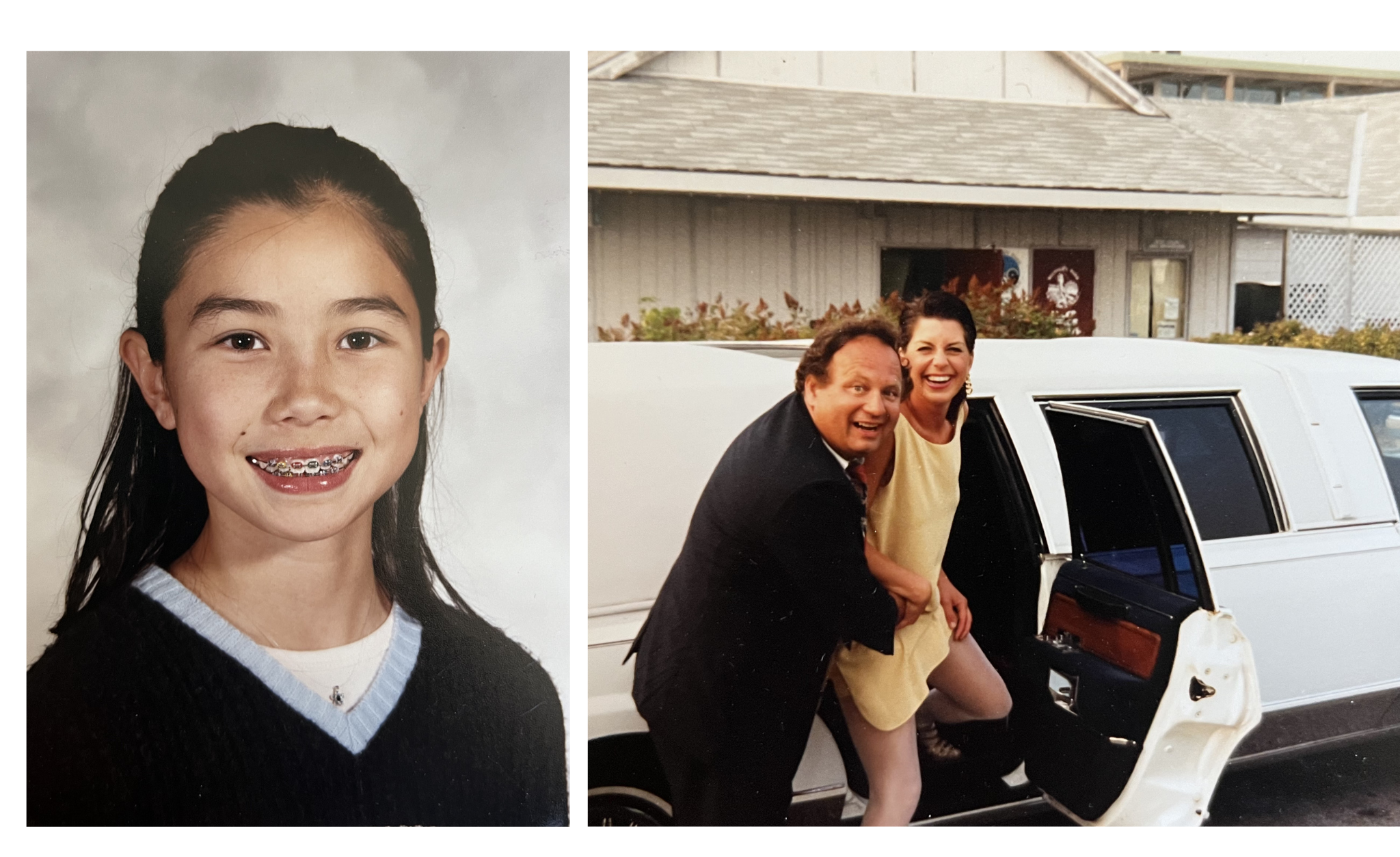
My mother heavily influenced how I have come to understand romantic relationships. Both by cautionary tale and, to her credit, some inspirational guidance I still respect. She believed that no man or woman should ever take rule over my life (or heart) so deeply that I need to depend on them. She hoped that I would travel often no matter what age. She said I should sleep around before settling down (if ever). I needed to make mistakes in love. I needed to be the wild child she wasn’t permitted to be as a stay-at-home mother of three.
Her desire for a domestic life was immediately met with an urgency to flee it. She was fit, social, funny, and smart. She was capable of incredible ideas and saw many into execution. But, she drank daily. Her restlessness was insatiable. Other mothers feared and were exhausted by her. She had multiple male friends who were inappropriate with her, and her with them. She often told me that marriage is only for those who really can commit to “boring.” I tried not to take it too personally when she warned me, countless times, I needed to think long and hard before becoming a mother.
In the first few drafts of my memoir, it was hard to write my mom into scenes that showed her kindness. She was so brash, it’s hard to recall the times she was gentle. Which, to raise three children, she must have been in the countless unseen ways a mother must be. I have since buried those moments, grief dug them deep, when I could not bear to face the wholeness of her.
We stopped speaking when I was 23 after she threatened suicide for the umpteenth time. I was around 29 when I got married, and 34 when I had my first daughter. I was 36 when she died of complications from oral cancer. I had only seen her less than five times in that 13-year span, two of which she was so close to death I’m unsure she even knew I was there.
My mom never met my daughter and we never resolved our open wounds. When I think of her combing my wet hair and putting on my pajamas while she sang disco ballads to us before bed, I could possibly crumble into vast nothingness. Replaying a time where she drove me home from a playdate, wasted and swerving into traffic, keeps my eyes and heart aflame. The intensity and drama of her keeps a certain darkness at bay.
The dangers of craving high stakes love stories can be less insidious than wanting to die or rob banks. What about the books and shows that cycle through couples like cartons of expired milk? How come we get bored the second a couple wander into wedded bliss? Is it possible we’re already over a couple once they simply admit they had a crush on one another?
In March 2026, The Hollywood Reporter did a piece on the wild success of HBO’s queer, hockey drama, Heated Rivalry (based on Rachel Reid’s series of hockey novels). Writer Nicole Fell reported that, “Sports romance is perhaps the most popular space in the marketplace at the moment,” and, “While not centered on queer characters, another hockey romance series, Off Campus, based on Elle Kennedy’s popular series of novels, is set to premiere on the Prime Video later this year. The series, which had already been heavily pushing itself out on social media before Heated Rivalry premiered, has already scored a second season order, months before the public has seen it.”
I’m suddenly back to staring at my poster of Leonardo DiCaprio. No longer are we just dealing with imagined characters in novels, but real people again. Except it’s not 1996 it’s 2026. Even emerging actors can gain millions of followers overnight, promoting material before it’s aired.
So, like millions of others, I pulled out my phone and opened Instagram during commercials. I saw in real-time how the collision of social media, the stardom of the actors, and music (look up The Beaches & Off Campus to get a feel for that cross section), all coagulated together in this tsunami of influence.
And then, there’s the storyline. (Reminder: spoilers ahead for both Off Campus and Wuthering Heights)
We meet our two main characters, a hockey star named Garrett Graham and a music nerd named Hannah Wells. (Sidebar: Are we still buying it that a hockey jock can’t fall for a music nerd? That a girl who geeks out to classical can’t win the heart of an athlete? I digress.)
These two finally get together in episode 5. For me, the saving grace in the show is how they portray post-traumatic behavior after assault. Plus the first sex-scene between the two is unique and pretty tender to the writer’s credit (I won’t spoil that). However, episode 6 kicks off with a 3-minute montage of these frenemies having ample sex in multiple locations, and there’s still three more episodes to go?
How will one even care to finish this series now?
Not to fret, the showrunners have tapped into our fleeting attention spans and calculated the perfect antidote. A POV shift. The supporting actors (in this case, Hannah’s and Garrett’s roommates) end up getting together in an even more unlikely coupling. (FYI: In the novels, “Allie,” and “Dean” don’t get together for another two books.)
How did they see them, our hands hovering over the remote, waiting to be force fed more yearning. Keep the show going, pause life instead. Forget your errands, forget your husband. Settle back into the couch. We’re back to the binge. When it’s over, scroll your feed for interviews with the actors and watch them watch hockey games, and watch your favorite band talk about being featured on the show.
I won’t cover yet another, final love-twist, when another even more “hateable” guy is put into the mix. All I know is that by the end of the season, I’m so over ‘Graham,’ and ‘Wellsy.’ Could love be any more boring?
Bridgerton has been capitalizing on our crappy attention spans for years. Entire seasons will be dedicated to a long cat-and-mouse-game, only to abandon those couples to the background, pushing out babies a season later. Maybe they’ll appear again in an intimate scene that’s more giggles in sunlit sheets versus that wild time you and your crush got to watch your servants act out a little BDSM from the hayloft.
Don’t we know by now? Once married, once a wife, your role is domestic. You’re there to help conspire the next match of the ton, aid a debutante shop for new silks, fiddle with your baby. Bor-ing! I don’t want to see these scenes because these scenes are what I live most days of my real life.
I know quiet drama doesn’t sell songs or books. But has the inverse succeeded in tricking us that once we finally achieve all these lovely things we once pined for, we now no longer want them?
In my interpretation of Brontë’s Wuthering Heights, I do think it’s somewhat clear that it’s not really better to die from sepsis resulting from premature childbirth. However, haunting your true love for the rest of eternity? Romantic.
Before we ask how dangerous crushes can become, we might need to back up. Here’s a better question: Are crushes innocent? Is the consumption of these type of stories hurting the standards we set with our real-life partners? If we deem crushes as innocent, when does it turn? What is the turn? From most conversations I’ve had with others, when a crush to turns into love or an emotional affair, you’re in trouble. Ditto for when the books and films you consume make you unhappy with your reality.
During the years I listened to a lot of Garbage, I also became a huge fan of punk and emo music. I became friends with a bunch of guys in a band and fell in love with most of them. I was awful to my girl friends, and I started to drink and smoke heavily.
As I rebelled, I noticed pride in my mother’s eyes when she saw me hungover or smelled smoke in my clothes. I had finally taken life by the balls. She never explicitly told me to join her side, but I crossed a threshold of my own making anyway.
The boy I ended up falling for the hardest was my best friend’s boyfriend. I have spent an entire manuscript asking myself how much I actually loved him, versus how much I wanted to please my mother. One afternoon when school was out, my mom and I shared a bottle of wine on her back deck. I told her about my feelings for this person and how much it would hurt my friend. I wasn’t sure what to do. She inhaled long on her cigarette and blew out. Her advice was always the same, worded slightly different depending on how much she had to drink. “Life is short. It’s a bitch. Then, you die. Have fun.”
Adultery is what many fear in monogamous relationships. Being cheated on is the ultimate end-game for most couples. We loathe the husband in the memoir Strangers. We are envious and yet judgmental of Nicole Kidman in Babygirl. Yet, most screenplays, books, and shows center affairs. In Wuthering Heights, as annoying as they are, you cheer for Heathcliff and Cathy, even though if you were sickly Linton in real life, you’d be devastated.
Like the fandom that followed Luhrman’s 1996 Romeo + Juliet, an even wilder landscape of celebrity has bloomed in the wake of Emerald Fennel’s 2025 adaptation. Women across TikTok and Instagram have posted viral reels in response to scenes from Wuthering Heights. Some videos show wives pulling their husbands into the rain while they wait for him to cover their faces like Jacob Elordi does for Margot Robbie.
Another reel shows a woman standing in a her backyard holding a glass of wine. A caption overlays: “Binged off campus, so now I’m touching some grass to remind myself I’m a married mother of 1, not a college student in love with a hockey player.” One of the comments replies with: “As a married mother of 1 myself I would like to ask: Is there a possibility to have both? Just … Maybe…”
There are so many more reactions like this. “Finished Off Campus and now I’m expected to just continue being a wife and mother???” and “True story: Watching Off Campus forgetting you’re old enough to be their mother.”
And it’s all women. Hetero-monogamous, married women are spiraling down into fantasy while their straight male partners ask, “is this from that movie?” Maybe they’re being cute, maybe they’re too far down the manosphere-brick-road to know what’s going on.
I watch these reels and realize I too have spent 2 hours of my precious alone time consuming this kind of content. I raise my head and take stock of my life: a sweet little house, two sleeping girls in their beds, a cranky cat, a loyal partner that yes! I once had a crush on!
Is it as simple as this?: Do married people who watch dramas about infidelity commit more affairs than the folks who love the Great British Baking Show? Does one need a blueprint of chaos and drama before they break their lives apart? What happens if all of this unfolds, as is the intention of excellent marketing, without us even realizing?
Part Three:
A sad ending led me to a happy epilogue
Most people who drink a lot pass out easily, but for some reason wine made my mom an insufferable night owl. She’d be able to put down bottles of wine and remain awake, wailing into the early hours of the evening about various abuses and wrongdoings she endured as a child. Sleeping pills became a necessity in order for her to be coherent the next day. I became used to seeing the orange bottles in our medicine cabinet and her purse. When she lost custody of us, she moved out of our family home when I was 13. She left behind some extra bottles of the pills. She was granted an endless supply from her doctor. I didn’t touch them nor did I think to throw them away.
By the end of high school my mix CDs were filled with songs about unrequited love. I drank more and stayed out all night. I didn’t have a curfew unlike my best friend. This meant I was able to stay up later almost every night that last summer I lived in my hometown. I became closer to her boyfriend who also didn’t have a curfew. I thought about my mother’s advice. I was getting closer to my goal, and worse, felt more justified in it as each night turned to dawn.
My hopes are so high that your kiss might kill me
So won’t you kill me, so I die happy?
My heart is yours to fill or burst to break or bury
Or wear as jewelry, whichever you prefer
- Dashboard Confessional, “Hands Down”
Lungs have failed and they both stopped breathing
My heart is dead and it’s way past beating
Something has gone terribly wrong
I’m scared, you’re scared, we’re scared of this
I never thought we’d make it out alive
I never told you but it’s all in your goodbyes
It’s all in your goodbyes
Well look who’s dying now
Slit wrists, sleeping with the girl next door
I always knew you were such a sucker for that whore
It doesn’t matter what you say
You never mattered anyway
Never mattered anyway
- Underoath, “A Boy Brushed Red, Living in Black and White”
I have spent years poring over lyrics like these scrawled all over my notebooks and journals. It’s clearer than ever that my culture at the time was telling me that true love was worth dying for. At the very least, I was happy to sell myself for a chance at love. I begged any god for blonde hair and blue eyes. (Or at the very least to wake up look like Jena Malone, who somehow was cast against every A-list heartthrob between 1999-2005.)
In the weeks before my mom died, she told my sister she regretted leaving my father. That she should have stayed with him. She did love him. She wondered if she might have eventually been happier for it.
Late August, shortly after my eighteenth birthday, I made out with my best friend’s boyfriend. The veil lifted so suddenly after he told me it was a mistake I was sick to my stomach. I had committed the worst thing I could ever have done, betray the best friend that loved me. I put these guys before her and myself. Worse, I had become my mother. I was her flesh and blood, I might not ever be able to change that. I had followed the blue print.
I took her pills.
I feel like I’ve experienced a “coming-of-age,” every leap year since that summer in high school. So many false starts due to an unfinished childhood.
I ended up traveling the world and experienced life as fully as I could. I learned that my depression was something that was a part of me, some aspects due to circumstances of my childhood, others inherited deep in my DNA.
I won’t discover for many years that maternal estrangement is buried in my family ancestry, and not that far removed. But in my early-twenties, two very fraught romantic relationships later plus a drinking and drug problem that was out of control, I took a long hard look at my reliance on her approval. As she continued her downward spiral I realized that the person I needed to betray was her.
The years that followed the estrangement from my mom were awful at first. Cruel and searing. Then, without warning, things got oddly light. When the five and then ten year mark passed in our estrangement, I took stock. My life was filled with love and stability. I didn’t go into dark spirals as much as I used to. My relationship to drinking changed, I traded in big cities for Maine. I had a daughter, and then two. Mothers days still are the worst, though.
Like a patient who finally gets a diagnosis after years of uncertainty, I find it soothing when I fit my struggles into a container. The more my depression had an explanation, the less I became beholden to the mystery of the abyss of the unknown. As time passed and therapists were hired, I started to enjoy the idea of fitting my raucous relationship with my mother in one of these easily explained categories. If my life was a one of seven basic plots, then thankfully I wasn’t alone. The drama can end.
It’s been three years since my mom’s death and I still feel like I’m stuck at the age we stopped talking. (At 23 I wasn’t much wiser than 17).
I sometimes am desperate to sit with her on a back deck somewhere and ask her for relationship advice, even though it would be terrible. I want to scold her for how much she left out on being a mother. I wish I could affirm to her, how beautiful I’m (mostly) finding raising kids. How I wished it could have been different for us.
“There’s no use in wondering what could have been,” she told me a few months before she died. “But I do, now that it’s ending, a lot.”
The other day, my daughter and I watched The Little Mermaid. We had seen it many times before, but awhile had passed since our last viewing. In such a short window, between age six and seven, I have seen her test the words “romance,” and “love,” aloud with us, a little flicker of mischief on her face. I can see it happening already, far too soon, the same longing in my heart, take hold in hers. What is informing it? Disney films like this, or something innate, deep in her being? What did I get from my mother, that I have passed down to her?
At the end of the movie, I heard a quiet sniffling. I looked at her, steady tears streamed down her face. Triton had just granted Ariel legs and was letting her go. She could be with her true love now. The one she risked her life for over and over. The one she had to leave her family for.
Between little staccato breaths, my daughter told me: “Don’t worry, these are happy tears, mama. She gets to be with Prince Eric now.”
I looked at the pained expression the illustrator gave King Triton, which undoubtedly matched mine.
It made me sad too, thinking of her little heart so full of, what? Resolve, I think. I don’t think pining is going anywhere. Whether it’s built inside our DNA or formed as young children, a life without crushing or feeling crushed, might be impossible. We will continue to burn our houses down only to miss them on our deathbeds.
It doesn’t make me sad though, being here in this house with them. Maybe because I’ve already explored the deepest trenches of my own sadness. I know there’s nothing for me down there anymore, and there’s only everything for me up here.